
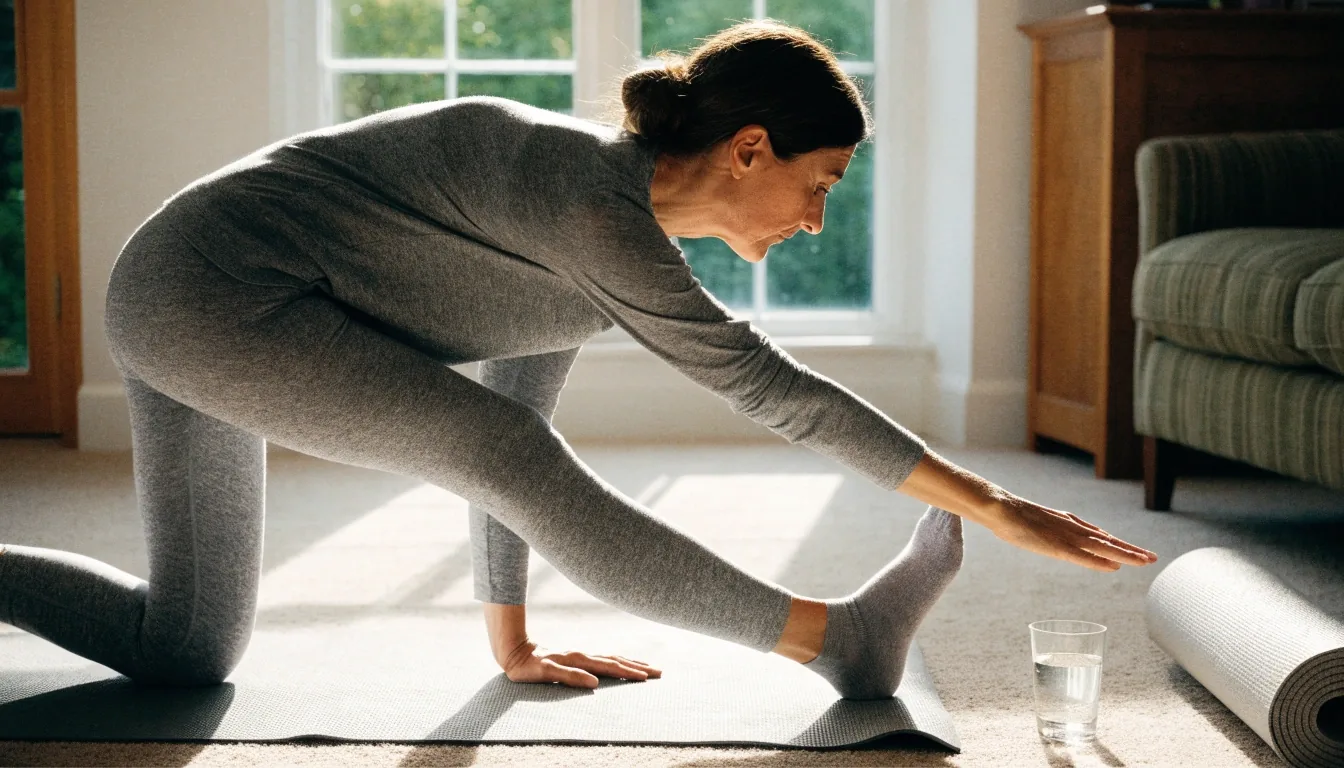
Movement & mobility
Gentle movement that keeps joints moving
Flexibility and comfort fade quietly when we stop using our range of movement, and they rarely fade because of one bad day. This page is about building a small, repeatable routine for knees, hips and the lower body — one that fits around work and family rather than competing with them.
Why movement quality matters
The moves you repeat most are the ones worth improving first: walking, stairs, and standing up.
The way you move shapes how much load your joints carry. A knee that tracks poorly under a heavy step takes more stress than one moving cleanly, and that stress adds up over thousands of steps rather than in a single moment. You do not need perfect technique to benefit. You need enough attention to notice when something feels wrong and to adjust the next step.
Walking, stairs and standing up are the moves you do most, so they are the ones worth improving first. Small corrections — a slower descent on stairs, keeping the knee roughly over the middle toes, pushing through the whole foot — change how the load is shared between the joint, the muscles around it and the ground. That is what restoring joint mobility day to day actually looks like in practice.
Walking
Low-impact, repeatable, easy to measure in minutes rather than miles.
Stairs
A controlled descent trains the thigh to brake, not just push.
Standing up
The sit-to-stand you do twenty times a day is already strength work.
A simple warm-up
Five minutes is plenty. The goal is warmth, not fatigue — a warm joint moves more comfortably, which is why people often find the second half of a walk easier than the first.
If you are stiff in the morning, this is a reasonable way to start the day before the kettle has boiled.
- 1 March on the spotOne to two minutes, arms swinging naturally, knees lifting to a comfortable height.
- 2 Roll your shouldersSlow circles, forward and back, to loosen the upper body that carries tension into the lower back.
- 3 Swing each legForward and back a few times per side, holding something steady if balance is unsure.
- 4 Ten slow knee bendsFeet flat, hips back, no rush. Stop short of any pinch and stay in the comfortable range.
Strength for the lower body
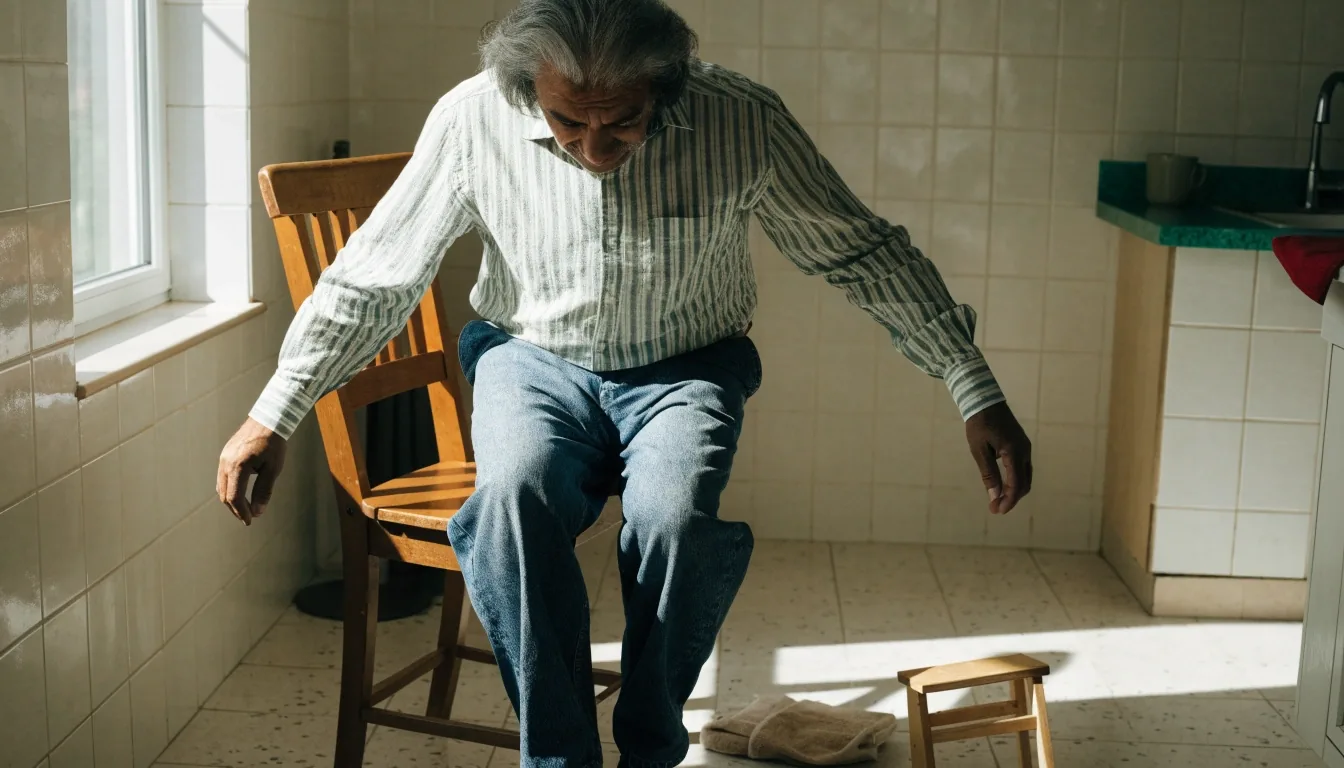
Strong thighs and calves take load off the knees. The movements that build that strength do not need a gym: chair stands, calf raises, step-ups onto a low step, and a slow sit-to-stand from a sofa all count. Do two sessions a week, spaced out rather than stacked into one long effort on a Sunday.
Expect to feel it in the muscles rather than the joints. Muscle soreness for a day or two is normal after a new kind of work. A joint that feels sharp or looks swollen is a different signal — that is a reason to stop and get it looked at, not to push through a set.
Session shape
Eight to twelve slow chair stands, ten to fifteen calf raises, six step-ups per leg, then a rest. Two rounds is a full session for most adults starting out.
What to watch
Keep the knee tracking over the foot, push through the whole foot, and breathe out as you stand. If the last two reps change how you stand, the set was long enough.
Stretching without forcing
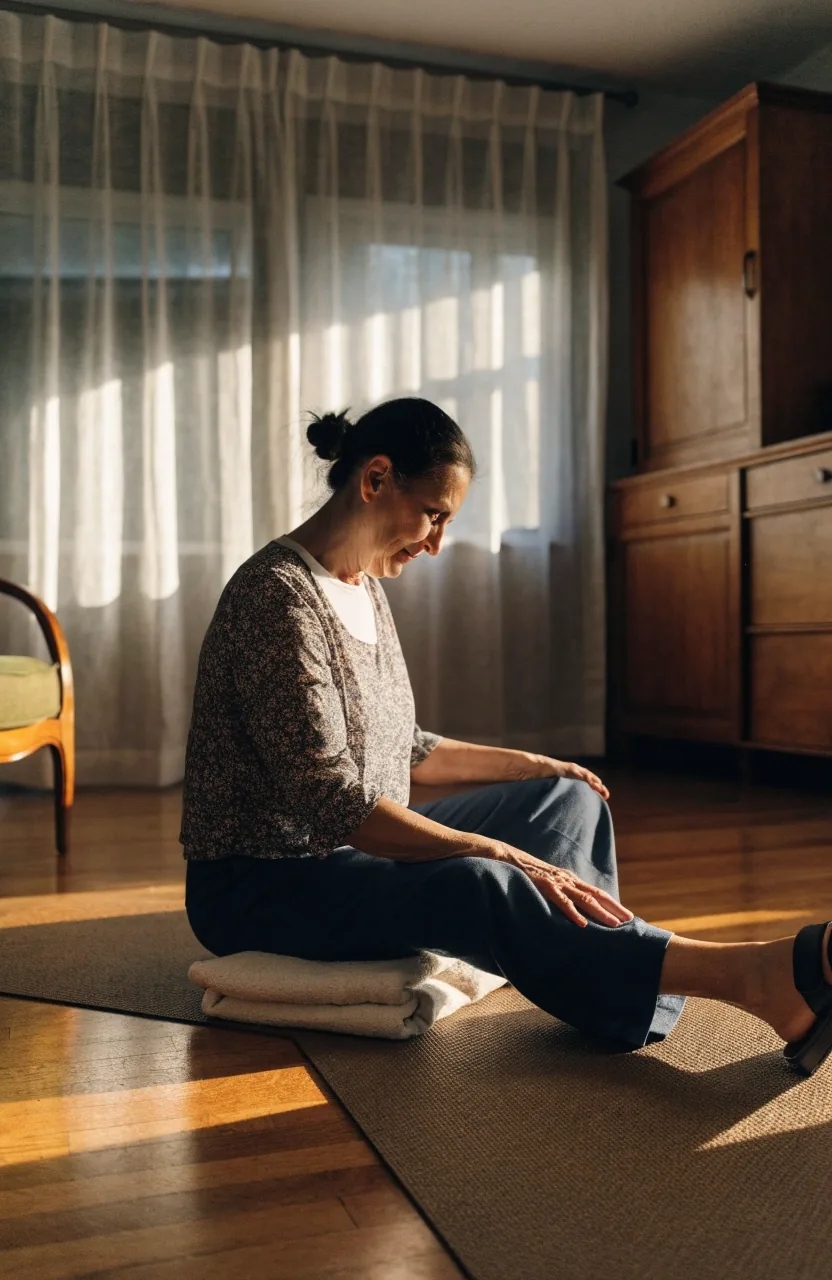
Stretch to the point of mild tension and hold for around thirty seconds. Breathe normally; if you are holding your breath, the stretch is too far. Hamstrings, calves and hip flexors are the tight spots most people find, and they are the ones worth a short daily attention rather than a long weekly session.
Stretching will not repair a damaged joint, and it will not transform flexibility in a week. What it does is maintain the range you already have, and holding on to range is much easier than winning it back after a long gap. That is the honest case for natural joint care alongside whatever else you do.
- Hold time
- Around 30 seconds, breathing steadily
- Sensation
- Mild tension, never sharp pain
- Best moment
- After a warm-up or a short walk
Walking as the base layer
If you do one thing, walk. It is low-impact, needs no equipment, and scales from ten minutes to an hour without changing anything except your shoes.
Build up gradually
Adding around a mile a week is a sane pace. If the last addition left you stiff for two days, hold there before adding more.
Shoes matter
More than people expect, especially on hard pavements. A shoe that supports the foot keeps the ankle, knee and hip working in a straighter line.
Walk with someone
The single biggest reason a walking habit survives a busy month. Company turns exercise into something you would miss.
Vary the ground
Pavement, park path and gentle slopes ask slightly different things of the ankles and hips, which keeps the routine from becoming one repeated demand.
Walking alone will not build much strength, so keep the two weekly chair-stand sessions in the plan. Together they cover the load and the range, which is what strong and healthy joints need from a routine.
When things flare up
Joints sometimes flare, and the answer is not always to push on. Back off the load, keep moving gently, and use warmth or cold if it helps you feel comfortable. A short walk on a flare day is usually better than a full session, and much better than sitting still for a week.
If a flare lasts more than a few days, or comes with swelling and heat, speak to a professional. Rest is a tool here, not a failure, and using it early often means losing less ground than pushing through does.
Adapting around a bad week
Some weeks fall apart. Travel, illness or a busy period at work will break the routine sometimes, and planning for that is more useful than pretending it will not happen.
The trick is to keep the smallest version going: a five-minute walk, one set of chair stands, a few slow knee bends at the kitchen counter. Something is better than nothing, and it makes restarting far easier than rebuilding from zero.
The smallest version
Five minutes of walking plus one set of chair stands. That is enough to hold the habit on a week when nothing else fits.
A week that fits real life
Two strength sessions, walking on most other days, and a short warm-up before anything harder. Move the days around to suit your week; what matters is that the patterns reappear rather than that they land on a particular date.
Strength days × 2
Chair stands, calf raises, step-ups
Two rounds, spaced across the week, not back to back. Leave at least a day between sessions so the muscles recover.
Walking × most days
Ten minutes up to an hour
Scale by time, not by pace. A slow walk you actually take beats a brisk one you keep postponing.
Daily × 5 minutes
Warm-up and gentle stretching
Before a walk or as a start to the morning. Thirty-second holds on the hamstrings, calves and hip flexors.

Signs to respect
Most stiffness is ordinary and responds to movement, warmth and patience. Some signals sit outside that and deserve an appointment rather than another set of exercises.
- Sharp pain that stops you mid-movement rather than a dull ache afterwards.
- A joint that gives way or feels unstable when you put weight through it.
- Swelling that will not settle after a few days of easing off the load.
- Pain that wakes you at night and does not ease when you change position.
This kind of movement advice is written for the everyday stiffness of ordinary life, not for undiagnosed problems. If in doubt, get it checked. A professional opinion costs one appointment and can save months of guessing.
Questions people ask
Short answers to the two things that come up most when someone starts building a routine.
How often should I do strength work for my joints?
Twice a week is a realistic starting point for most adults, with walking or another gentle activity on most other days. If two sessions feel like a lot in the first month, start with one and add the second once the first has stopped leaving you sore for days.
Can I stretch an inflamed joint?
No. Ease off and keep gentle movement only. Sharp pain, heat or swelling is a reason to seek advice, not to stretch more — and a stretched inflamed joint tends to feel worse the following day rather than better.
Is a warm-up really necessary before a short walk?
For a casual stroll, no. For a longer walk, a hill, or the first half hour of a morning when you feel stiff, five minutes of marching and knee bends makes the first stretch of the route noticeably more comfortable and often lets you cover more ground.
What belongs alongside a movement routine?
Movement is one part. Everyday nutrition, sleep and how much time you spend sitting also shape how joints feel day to day. Our nutrient guide explains what supplement formats usually contain and what to check on a label, so a daily joint capsule is understood as support alongside the routine rather than a replacement for it.

Start with one walk this week
Pick a day, pick a route you already know, and go for ten minutes. Add the chair stands when the walk has settled into a habit. Questions about the routine, a supplement format or what belongs in a daily plan are welcome — we answer them Monday to Friday, 9:00 AM to 6:00 PM, and Saturday 10:00 AM to 2:00 PM.
Written for adults in the UK building everyday routines. Nothing here diagnoses or treats a condition — if a joint problem is undiagnosed, speak to a qualified professional first.