 Northstride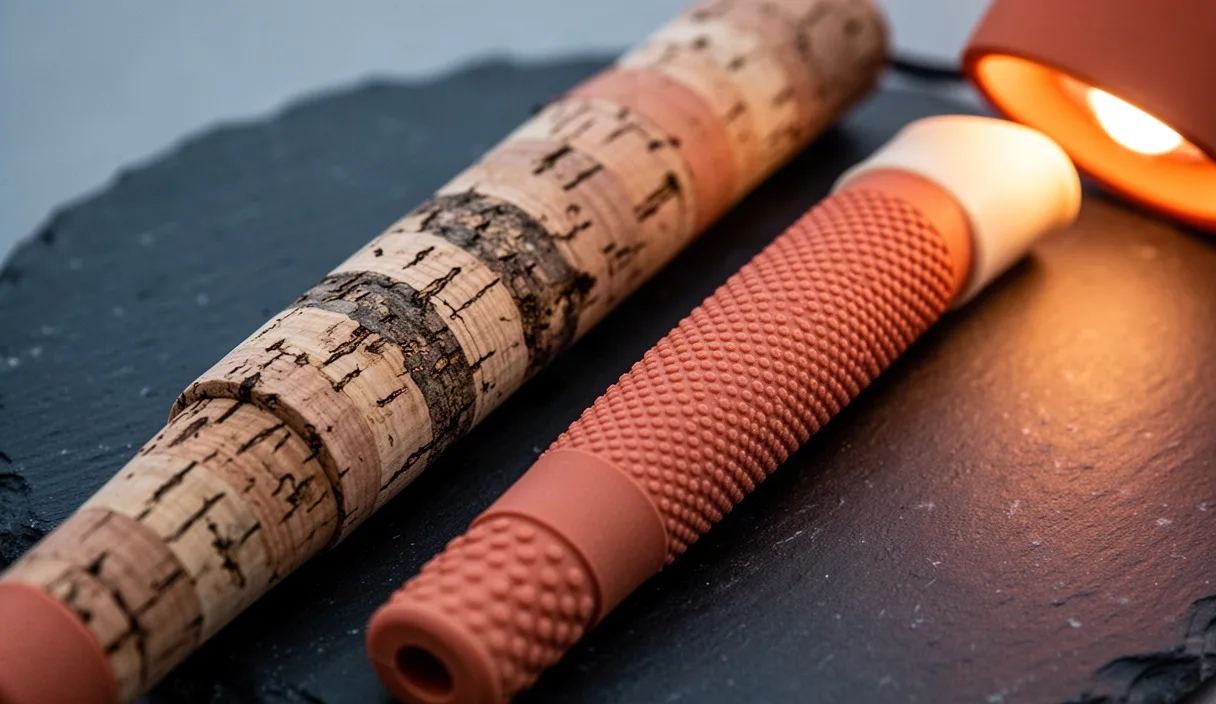

When we turn pole handles on our lathe or press raw compound into cast molds, we think constantly about the four square inches of skin that meet the tool. A walking pole is not a static cane. Over the course of an eight-mile trail loop, your hand opens, hinges forward, plants pressure onto the wrist loop and grip crest, and releases backward several thousand times. If the interface between your palm and that turned cylinder produces excess friction or fails to shed moisture, your gait falters, and your skin bears the cost.
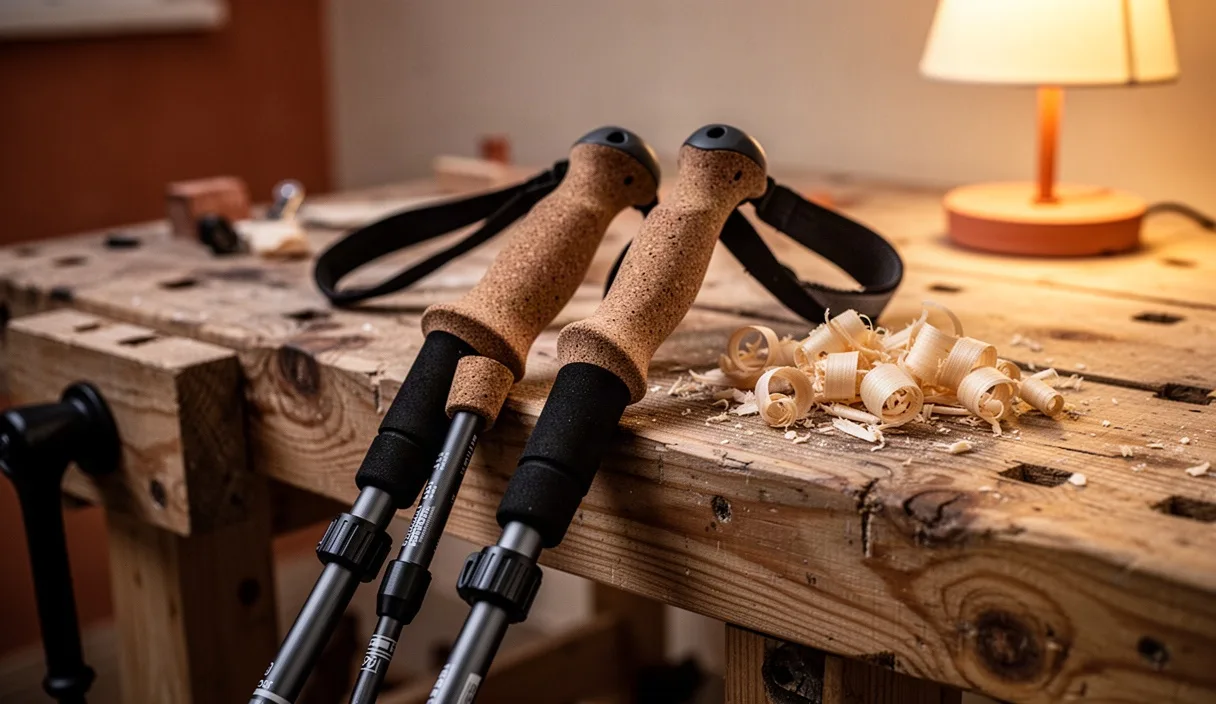
Every handle material represents an engineering compromise between mechanical life and tactile softness. In our workshop, the debate usually centers on two distinct materials: harvested cork granulate bound under pressure, and dense vulcanized synthetic rubber. Both serve distinct trail conditions, seasonal weather patterns, and biomechanical demands. Understanding how each behaves against flesh, sweat, and cold rain will help you choose the correct tool for your terrain.
How palm friction affects your grip release
In correct pole walking technique, you do not strangle the handle with a white-knuckle hold. Instead, you maintain an open, fluid cycle. As the pole tip bites into the soil behind your back leg, your palm bears down on the head and strap; as the pole swings forward, your fingers open, allowing the handle to pivot freely against the base of your thumb and your index finger. This rhythmic release requires a surface with a predictable dynamic coefficient of friction.
If a handle surface becomes slick with perspiration, your fingers instinctively pinch tighter to keep the pole from sliding out of alignment. This involuntary isometric contraction travels up your forearm flexors, through the radial tunnel, and into your shoulder girdle. Over three hours of movement, that minute muscle tightening creates fatigue in the forearm and inflammation around the elbow tendons. Conversely, a grip that is excessively tacky will grip your skin too aggressively during the forward release, causing shear stress across the epidermal layers that leads directly to hot spots and blisters.
Rubber and cork manage this skin shear differently. Dense rubber grips have a higher static friction level, which holds fast against dry skin but can drop sharply once a thin film of water or palm sweat sits on the non-porous exterior. Pressed cork maintains a lower initial grip coefficient, but it offers a far more stable dynamic friction level across dry, damp, and sweat-soaked states because its surface microstructure continuously breathes away the boundary layer of fluid.
The physical properties of pressed cork grips
Natural cork grips are rarely bored from a single solid cylinder of virgin cork bark. Instead, manufacturers grind the outer bark of the cork oak (Quercus suber) into uniform granules, mix them with a polyurethane or resin binder, and press them into high-density sleeves under controlled heat. This pressed construction produces a material with roughly 40 million air-filled cellular pockets per cubic centimeter, creating a handle that is remarkably light and thermally non-conductive.
Because the cells are filled with an air-like gas mixture and coated with suberin, a natural waxy fatty acid, cork will not wick water deep into its internal matrix. Instead, it absorbs micro-droplets of sweat into its surface pores through capillary action, pulling liquid away from your palm without softening or losing structural integrity. When you grasp a cork handle at sunrise in forty-degree weather, it does not suck warmth out of your bare hands. It warms to your body temperature within three or four strides because of its exceptionally low thermal conductivity.
Over sixty to eighty miles of steady use, pressed cork undergoes a subtle plastic deformation. The combination of body warmth, hand pressure, and natural skin oils gradually polishes down high spots and beds the handle shape directly to your grip contours. The cork darkens from a pale straw hue to a rich amber, developing an individualized patina that feels tailor-made to your skeletal structure. However, because it relies on mechanical grain bonding, cork remains vulnerable to impact chips if dropped onto sharp granite or chewed by rodents seeking the salt deposits left behind by your palms.
Durability and weight of dense rubber grips
Dense rubber handles are molded from synthetic elastomers, primarily thermoplastic elastomers (TPE) or vulcanized synthetic rubbers like ethylene propylene diene monomer (EPDM). These materials are chosen for their resilience against harsh environmental exposure. While a standard pair of pressed cork grips typically weighs between 34 and 44 grams, an identical pair molded from solid rubber weighs between 68 and 92 grams. For long distance hikers counting total swing weight over a twenty-mile day, that additional mass at the top of the shaft increases pendulum resistance with every arm drive.
What rubber costs in swing weight, it repays in mechanical resilience. A dense synthetic grip is virtually impervious to mechanical abrasion, trail drops, scraping along limestone ledges, and freezing rain. If you scramble through scree fields or wedge your pole handles beneath deadfall to arrest a slip, rubber will not split, crumble, or shed chunks along its seams. Furthermore, rubber acts as a natural dampener for high-frequency vibrations. When your pole tip strikes frozen ground, bedrock, or concrete sidewalks, rubber attenuates the shock wave before it travels into the small joints of your carpal bones.
The trade-off comes down to temperature response and skin moisture. In sub-freezing temperatures, synthetic rubber stiffens, lowering its shock absorption and drawing heat out of bare fingers. In summer heat, non-porous rubber traps palm sweat on the surface, creating an oily film of saltwater and skin cells that causes hands to slip unless deeply grooved channels are molded into the design to drain the liquid away.
Cleaning ground oils out of natural cork
Over a season of rigorous walking, cork handles collect an accumulation of sebum, sunscreen, particulate trail dust, and sweat salts. This residue fills the microscopic air cells on the handle surface, turning the cork slick, dark, and shiny. When this glazed crust forms, cork loses its ability to pull moisture away from your skin. We recommend restoring the surface once every season using a measured workshop process.
- Dry brush clearing. Take a stiff nylon utility brush and scrub the grip lengthwise along the grain lines to dislodge dried soil, dried mud crusts, and loose surface grit. Do not use a brass or steel wire brush, which will tear deep furrows into the soft binder.
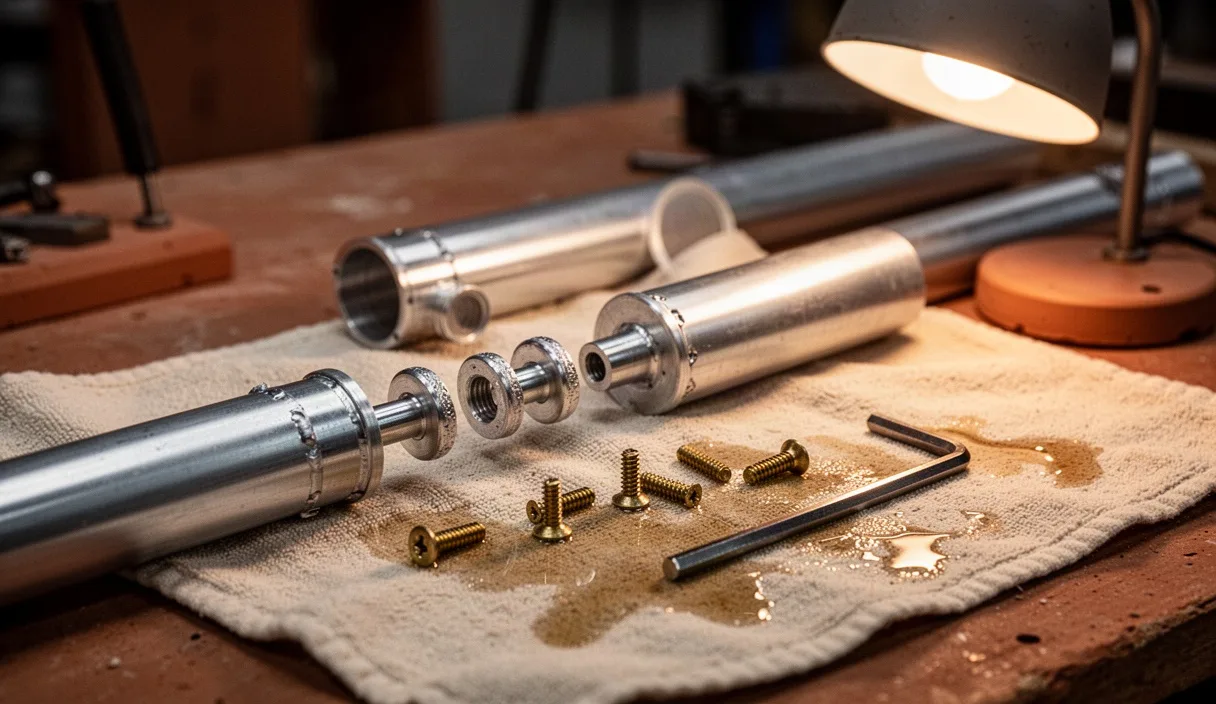
- Mild surfactant wash. Mix five milliliters of neutral castile soap or gentle unscented dish detergent into half a liter of lukewarm water. Dip a clean cotton shop rag into the solution and wring it out until it is barely damp. Never submerge the pole grip in a bucket or hold it under running water, as moisture can creep under the glue line between the cork sleeve and the aluminum or carbon fiber shaft.
- Surface emulsification. Rub the damp cloth firmly across the dark patches of the cork, working in small circular strokes. For stubborn, heavily glazed areas where oils have baked in under the sun, work a lightly moistened melamine foam block over the area with very light pressure to lift the grease out of the cellular pores.
- Rinse and wipe. Dampen a secondary clean rag with pure tap water, wring it out thoroughly, and wipe away all soap residue. Remaining soap will attract dirt twice as fast on your next outing.
- Abrasive grain dressing. Once the handle has dried completely for six to eight hours, inspect the texture. If the cork still feels slick or has minor gouges, take a strip of 280-grit to 320-grit silicon carbide sandpaper and lightly scuff the exterior using long strokes from the grip crown to the lower flare. This process removes the dead outer cells and exposes fresh, porous cork granulate underneath.
- Curing. Set the poles in a dry room with good air circulation for twenty-four hours before using them. Avoid placing them directly against a radiator or in front of a forced-air heater, which can cause the binder resins to dry out and crack.
Selecting grips for wet autumn walks
Autumn brings rapidly shifting moisture levels, blowing sleet, and trails carpeted with decaying leaf litter. During this transitional shoulder season, walking poles must provide dependable purchase whether your hands are bare and damp or encased in woven wool, fleece, or waterproof membrane gloves.
When selecting a handle for these conditions, consider how the material performs against fabric rather than bare skin. Rubber grips that feel slick against a sweaty, bare palm often provide an exceptional, non-slip purchase against synthetic fleece or textured leather gloves. The pliable synthetic rubber interlocks with the glove weave, preventing your hand from migrating up the shaft during steep descents. Conversely, cork can occasionally slip against smooth, cold glove liners unless the strap is adjusted properly to bear your downward weight.
| Material Characteristic | Pressed Natural Cork | Dense Molded Rubber |
|---|---|---|
| Average pair weight | 38 grams | 78 grams |
| Wet grip against bare skin | High (sweat and water absorb into micro-pores) | Moderate to low (sweat pools on surface) |
| Wet grip against wool gloves | Moderate (slips on slick glove liners) | High (rubber interlocks with glove weave) |
| Thermal insulation | Excellent (warm to bare hands down to freezing) | Poor (draws body heat rapidly when cold) |
| Impact and tear resistance | Moderate (can chip on sharp rocks or edges) | Very high (virtually indestructible) |
| Seasonal maintenance | Periodic degreasing and light sanding | Occasional rinse with clear water |
For walkers navigating rainy autumn days where the mercury hovers between thirty-eight and forty-eight degrees Fahrenheit, pressed cork remains our primary recommendation if you prefer moving without heavy gloves. The thermal insulation prevents hand numbness, and the surface will not grow slick in light drizzle. However, if your autumn itineraries involve navigating rocky scrambles where poles clatter into stone fissures, or if you regularly wear fleece-lined windproof gloves, rubber provides a rugged, worry-free connection that outlasts abrasive trail punishment.
Common mistakes
- Applying mineral oils or leather balms to cork. Walkers often believe that dry cork needs hydration like leather or raw wood. Applying linseed oil, wax, or mineral conditioning oils permanently clogs the closed-cell structure of the bark, ruining its sweat-absorbing properties and creating a permanent, slippery coating that cannot be scrubbed out.
- Clamping the hand too tight on slippery handles. When trail rain reduces purchase on a molded rubber grip, many walkers tighten their fingers around the shaft instead of shortening the wrist loop. If your hands slide, shorten your strap so your palm rests firmly in the strap cradle, taking the load off your flexor muscles. If hand pain or numbness continues over days of walking, consult a physical therapist or medical specialist to assess joint alignment.
- Cleaning synthetic rubber with hydrocarbon solvents. Using acetone, mineral spirits, or brake cleaner to strip trail sap or grease from rubber grips will dissolve the plasticizers inside the elastomer. The rubber will become sticky, turn into an uncurable paste, or embrittle and crack within weeks. Use only mild soap and water.
- Leaving damp cork poles stored inside non-breathable bags. Storing wet cork poles inside closed nylon gear sacks or plastic tubes traps moisture between the cork granules. This creates an environment where mold can colonize the binder material, breaking down the integrity of the handle from the inside out.
Next steps for your gear bench
Set your poles horizontally across two sawhorses or on your work table under bright light. Run your bare fingers slowly across the grip body, checking for deep gouges, areas where the material has glazed smooth, and any separation where the grip meets the upper shaft tube.
If you carry cork grips that have seen more than sixty miles of trail, perform the surfactant cleaning process outlined above to strip out ground oils before winter sets in. If your routes involve sharp rocks, cold rainfall, and glove use, inspect your rubber grips for edge wear along the molded texture grooves. By addressing material degradation at the workbench today, you ensure that every stride on tomorrow's trail delivers clean support, smooth release, and complete control over your movement.